
Why the SMT line process matters to buyers
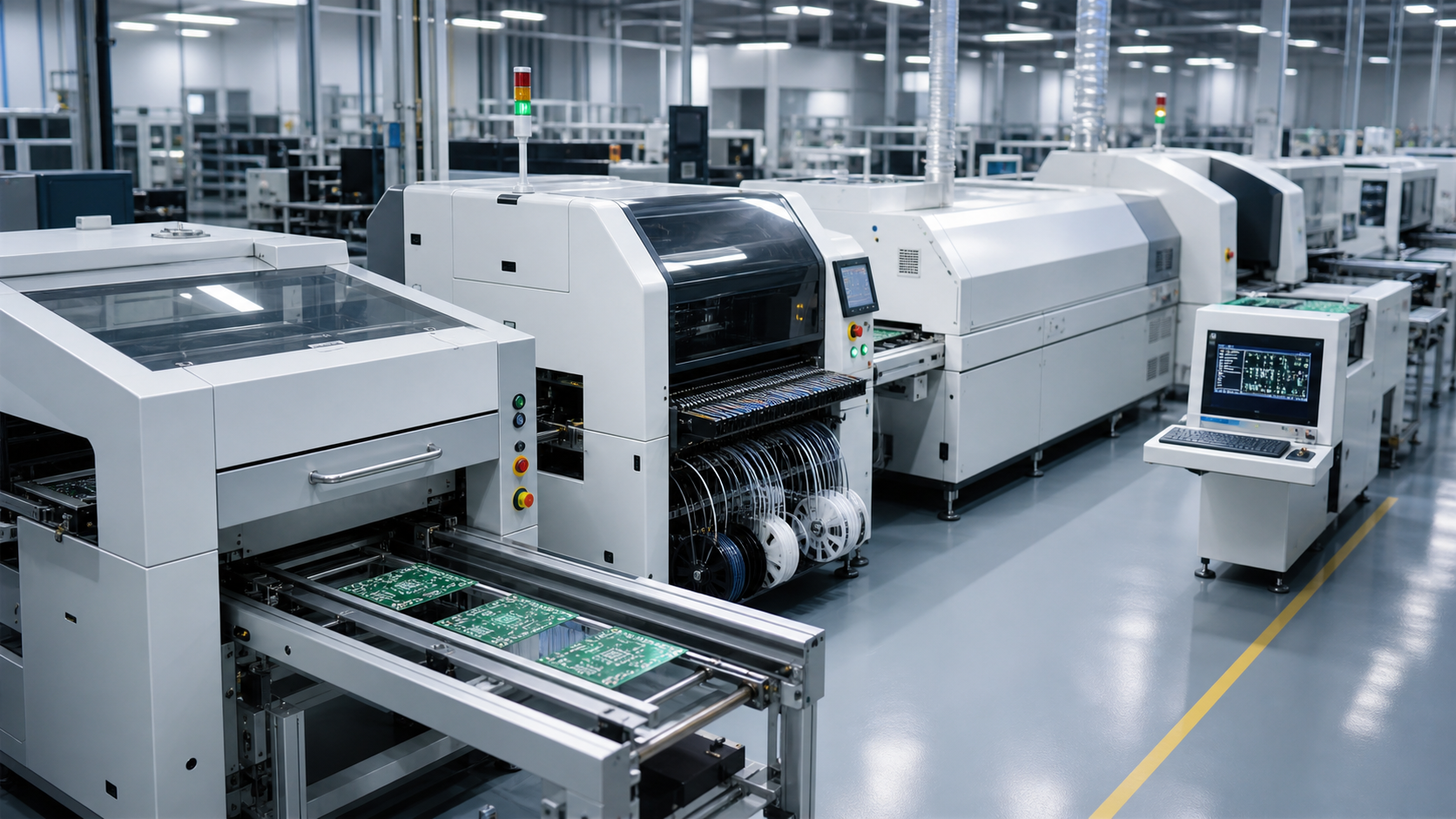
Many buyers search for SMT line process when they are planning a new electronics line, training operators, or comparing suppliers. The process looks simple from a distance: print paste, place components, heat the board, and inspect it. In real production, each stage affects yield, speed, and labor cost.
A well-designed SMT line keeps material flow stable and makes problems visible early. That is why modern equipment suppliers and major competitors emphasize process control, automation, inspection feedback, and line balancing alongside machine speed.
Step 1: Solder paste printing
The process begins with solder paste printing. The stencil, squeegee pressure, board support, paste condition, and alignment determine whether pads receive the right amount of solder. Poor printing can create bridges, insufficient solder, tombstoning, or open joints later in the process.
For higher-quality lines, SPI can be added after printing to measure paste volume and catch defects before components are placed. This is especially valuable for dense boards, LED modules, and products with fine-pitch components.
Step 2: Pick-and-place mounting
The pick-and-place machine mounts components from feeders, trays, or sticks onto the pasted PCB. Key variables include feeder setup, nozzle selection, placement accuracy, component recognition, board support, and production program quality.
A good SMT line is not simply the fastest mounter. It is a balanced system where component range, board size, changeover time, and downstream reflow capacity all match the production target. For buyers with mixed orders, flexible placement and quick setup may matter more than maximum catalog speed.
Step 3: Reflow soldering
After placement, the board enters the reflow oven. The temperature profile must match solder paste type, board thickness, component sensitivity, and production speed. Stable profiling helps avoid cold joints, voiding, component shift, and heat damage.
For LED products and power electronics, thermal control is especially important because board materials and component packages can react differently under heat. The reflow stage should be validated during product introduction, not guessed during mass production.
Step 4: AOI inspection and feedback
Automated optical inspection checks component presence, polarity, position, solder quality, and visible defects. AOI should not be treated as only a final gate. Its real value increases when defect data feeds back into printing, placement, and reflow decisions.
When AOI is integrated into the line process, operators can identify recurring issues faster and reduce rework. This supports stable output during long shifts and helps new operators maintain quality with less dependence on individual experience.
Post time: Jul-23-2026