



Why SMT Inspection Solutions matter now
Before autumn electronics exhibitions, many factories review the weak points in their SMT line. Some have enough placement speed, but they still lose time through rework. That is why SMT Inspection Solutions are useful for buyers planning upgrades.
Inspection is not one machine only. It is a process plan. It should check paste, placement, solder joints, missing parts, wrong polarity, and repair data.
SPI, AOI and inline checks
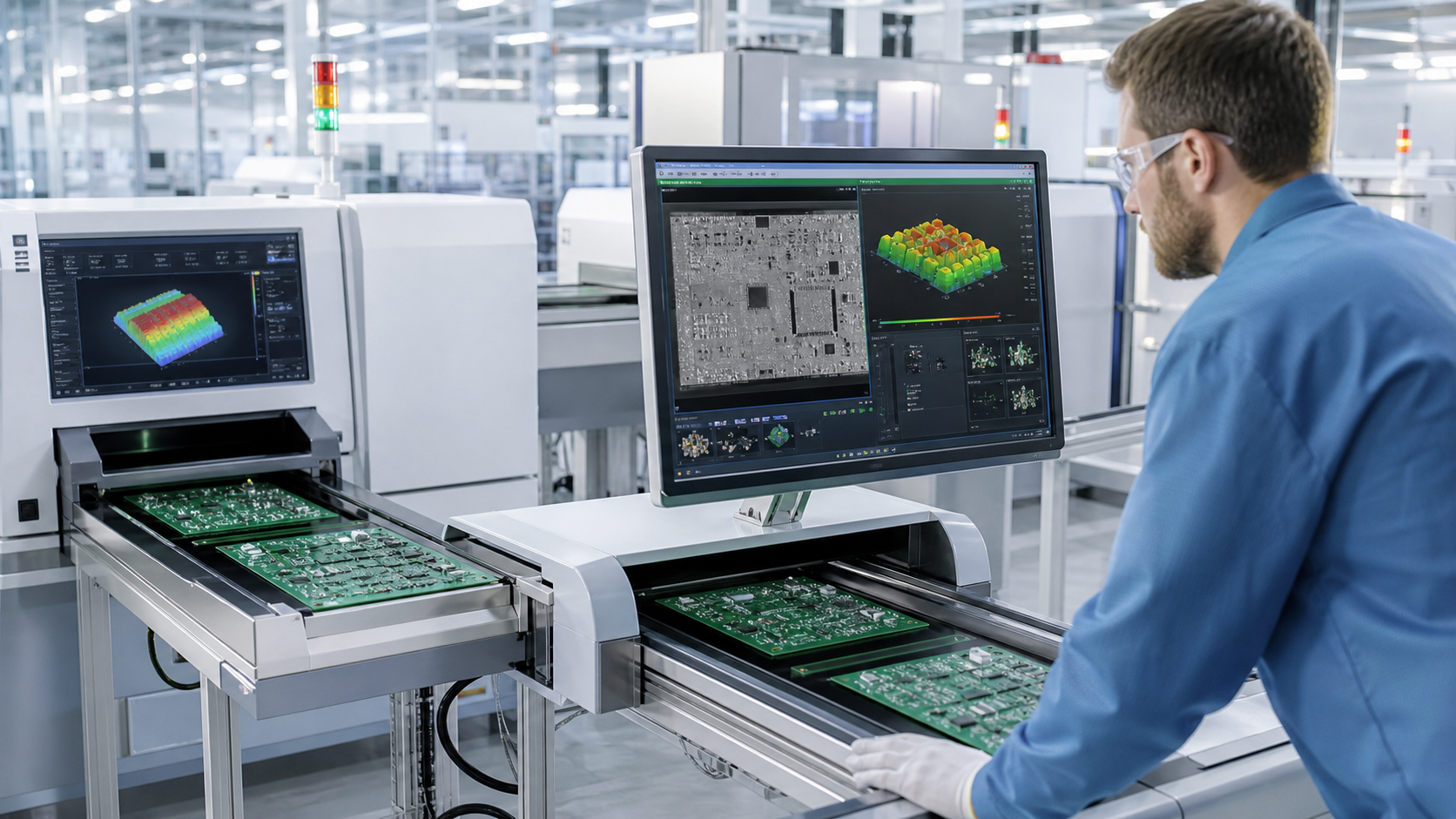
SPI inspection checks solder paste height, area, and volume before placement. This step helps catch printing problems early. If paste is wrong, the line should stop before expensive parts are placed.
AOI inspection checks the board after placement or reflow. It can find skewed parts, missing parts, bridges, and polarity issues. Together, SPI and AOI support stronger PCB quality control.
How to choose the right setup
First, define the product risk. Fine-pitch ICs, LEDs, automotive boards, and high-value products need tighter inspection. Next, define the speed target. The inspection machine should not become the line bottleneck.
Then review data needs. A good SMT line should help engineers see defect patterns. Over time, this data can reveal feeder problems, paste issues, oven drift, or operator errors.
Factories should also decide where inspection is most useful. Some lines need SPI before placement. Some need AOI after reflow. High-risk products may need both steps and clear repair feedback.
The right choice depends on defect cost. If one failed board is expensive, earlier inspection is worth more. If the product is simple, a lighter setup may be enough.
ETON positioning and CTA
ETON can frame this article as a practical quality-control guide. The buyer should send the PCB type, smallest component, defect history, and output target before asking for a full SMT solution.
For social proof, add the ETON LinkedIn SMT precision demo near the CTA. It supports the message that stable placement and inspection should work together.
The article should avoid sounding like a single-machine catalog. It should show buyers how inspection connects with printing, placement, reflow, repair, and operator training.
Send your PCB type, defect concerns, and output target for an inspection plan.
Post time: Aug-27-2026